Iran war hits US economy as gas prices, transport costs surge
Amazon plans on adding additional 3.5% fuel fee on third-party sellers to the US from 17 April.
PTI
-
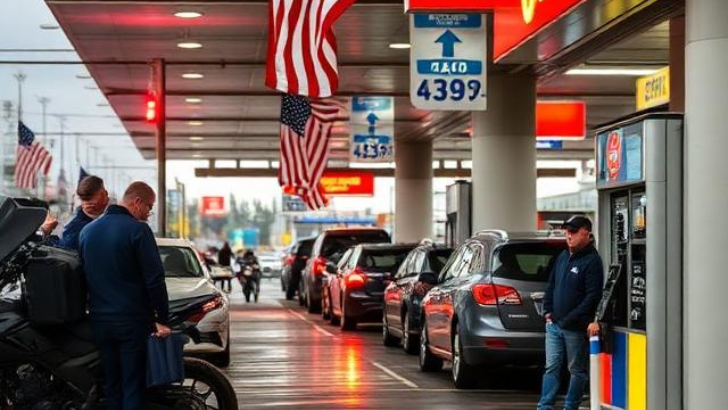
The average price of petrol in the US has increased to USD 4.09 a gallon (AI)
Washington, 5 April
The war
against Iran has started to impact Americans, with Amazon announcing a fuel
surcharge for its e-commerce deliveries and some airlines hiking fees for
checked-in baggage to offset higher fuel costs.
The average price of petrol in the US has increased to USD 4.09 a gallon on Friday, up more
than one dollar from just before the war and the highest level since August
2022.
The cost of
diesel has risen sharply from USD 3.64 per gallon a year ago to USD 5.53 per
gallon on Friday, according to data maintained by the American Automobile
Association (AAA). Diesel is widely used in farming, construction and
transportation, besides other industries.
E-commerce
giant Amazon also said that, beginning 17 April, it plans to add a 3.5 per cent
fuel surcharge on third-party sellers.
The US
Postal Service on Wednesday said it is seeking to impose a temporary 8 per cent
fuel surcharge for package and express mail deliveries to deal with rising
transportation costs.
If approved
by the Postal Regulatory Commission, the surcharge would take effect 26 April
and remain in place until January 17, 2027, the Postal Service said in a notice
on its website.
If the war
against Iran stretches longer, it will also lead to supply chain disruptions in
the US.
“I don’t
think the US will avoid it. These are global markets,” Rachel Ziemba, a New
York-based analyst who advises corporations on geopolitical risk, was quoted by
The Washington Post as saying.
“Experts,
even a week ago, were worried. Now they are more worried,” she said.
"If
transportation costs start rising, it's going to bleed through in other
prices," Austan Goolsbee, President of the Federal Reserve Bank ofChicago, was quoted as saying by CBS.
"So I
think it's in the near term, but not immediate, that you would start to see
that weighing down of the consumer — they would just get sticker shock. People
were already highly concerned about affordability and the cost of living, and
this would just be piling onto it," he said.
Blocking
the Hormuz Strait has already cost the global economy hundreds of millions of
barrels of oil, with the effects felt on a rolling basis corresponding to
travel time from the Persian Gulf, The Washington Post reported, quoting from a
recent client note from JPMorgan’s commodities specialists.
Asia was
first to feel the loss of Gulf oil shipments, where governments have ordered
rationing and conservation measures. Europe is likely to suffer physical
shortages by mid-April as the last vessels loaded with oil before the war arrive
at continental ports.
Since ittakes 35 to 45 days to reach US ports from the Strait, the United States will
be the last market to suffer.
Prices will
rise, but shortages of refined products starting in late April or May will
probably be confined to California, which is physically isolated from the
nation’s fuel supply system, the JPMorgan report said.
Share Now

Leave a Reply
Your email address will not be published. Required fields are marked *
Other Stories