Islamabad under lockdown as uncertainity clouds US-Iran talks
The first round of US-Iran talks held on 11-12 April failed, prompting a flurry of diplomatic efforts by host Pakistan to cool tensions.
PTI
-
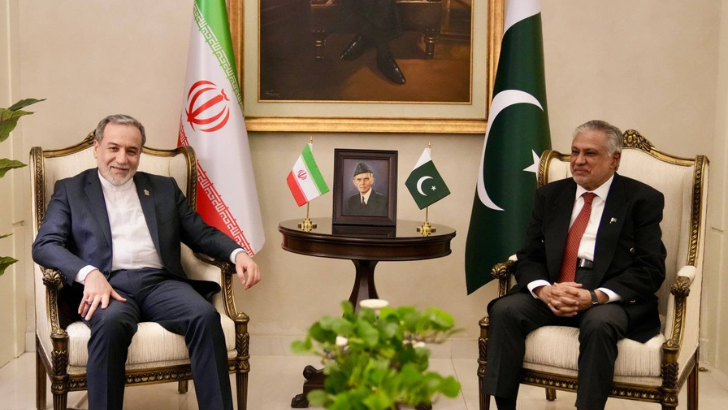
Iran FM Abbas Araghchi in talks with his Pakistani counterpart Ishaq Dar (IFM)
Islamabad, 25 April
Large parts of Pakistan's capital remain under a tight
security lockdown for over a week on Saturday, even as uncertainty persisted
over the proposed second round of talks between the US and Iran.
Arterial roads leading into Islamabad are sealed, while the
Red Zone, housing key government buildings and diplomatic missions, remains under
a strict security cordon. In the adjacent commercial 'Blue Area', markets are
deserted, cafes are running short of supplies, and public transport disruptions
with no service at bus terminals have left commuters stranded.
For residents, uncertainty has become the hardest part.
Islamabad is a city of transients, where many residents work during the week
and return to family homes at the weekend.
This is the second lockdown in recent weeks. Islamabad was
earlier sealed on 11 April for talks between the US and Iranian delegations
that ended without a deal. The city briefly reopened before restrictions were
re-imposed as Pakistan prepared to host another round of engagements, which has
yet to materialise.
Iran's Foreign Minister Abbas Araghchi arrived here late
Friday for engagements with the Pakistani leadership. He was received by senior
officials, including Army chief Field Marshal Syed Asim Munir, foreign minister
Ishaq Dar and interior minister Mohsin Naqvi. However, there is no clarity on
whether direct talks between Washington and Tehran will take place during the
visit.
"No meeting is planned to take place between Iran and
the US. Iran's observations would be conveyed to Pakistan," Iran’s Foreign
Ministry spokesperson Esmaeil Baqaei said in a social media post on Saturday.
He said the Iranian delegation arrived in Islamabad"for an official visit" and Araghchi will be "meeting with
Pakistani high-level officials in concert with their ongoing mediation and good
offices for ending American-imposed war of aggression and the restitution of
peace in our region".
As the Iranian team landed in Islamabad, White House Press
Secretary Karoline Leavitt said that US Special Envoy on the Middle East Steve
Witkoff and President Donald Trump's adviser Jared Kushner would be leaving for
Pakistan on Saturday "to engage in direct talks" with representatives
of the Iranian delegation.
“Everyone will be on standby to fly to Pakistan if
necessary, but first, Steve and Jared will be going over there to report back
to the president, the vice president and the rest of the team,” she said. However,
the US team has not yet arrived.
Meanwhile, Pakistan's Deputy Prime Minister and Foreign
Minister Dar, in a social media post, expressed hope for "meaningful
engagements" between the two warring parties to promote regional peace and
stability. The Foreign Office here said Iranian foreign minister Araghchi will
hold meetings with Pakistan’s senior leadership to discuss the latest regional
developments as well as ongoing efforts for regional peace and stability.
"Following key discussions with the Pakistani mediation
team, a second round of peace talks between the United States and Iran is
expected to be held in Islamabad on Saturday and Sunday," a government
official said.
He said a US logistics and security team is already present
in Islamabad to facilitate the negotiation process.
Araghchi, before leaving for Islamabad, said that he was
embarking on a timely tour of Islamabad, Muscat, and Moscow, and the purpose of
his visits is to "closely coordinate with our partners on bilateral
matters and consult on regional developments.Our neighbours are our
priority," he said.
The first round of US-Iran talks held on 11 and 12 April failed
to produce a breakthrough, prompting a flurry of diplomatic efforts by host Pakistan
to cool tensions and revive hopes for another round of dialogue.
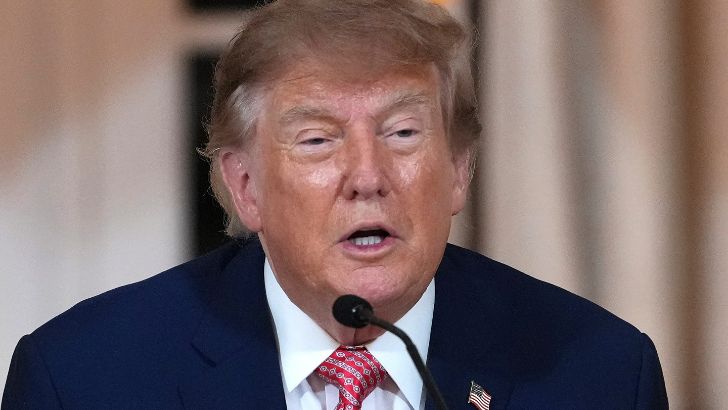
On Tuesday, Trump extended the two-week ceasefire with Iran
indefinitely to give Tehran more time to prepare a unified proposal to end the
war, just hours before the truce was set to expire.
The Iran war began on 28 February with US-Israeli strikes.
Share Now

Leave a Reply
Your email address will not be published. Required fields are marked *
Other Stories