US, Israel & Iran agree to 2-week ceasefire; talks to begin soon
Netanyahu's office said Israel supports Trump's ceasefire for two weeks but that it doesn't include the war with Hezbollah in Lebanon.
PTI
-
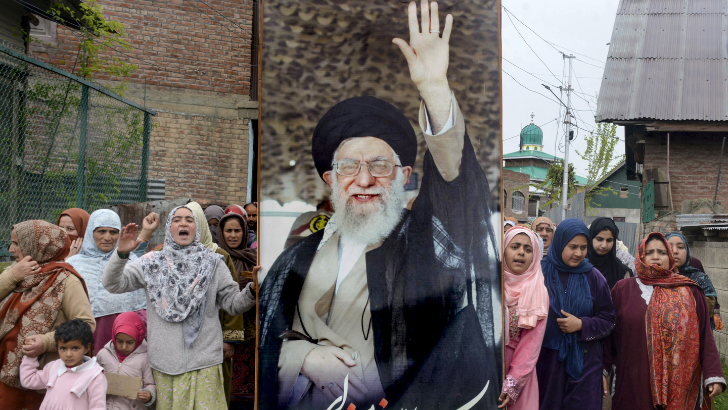
Muslims in Jammu and Kashmir raise slogans and celebrate the Iran-Israel-US ceasefire deal (PTI)
Dubai, 8 April
Iran, the United States and Israel said they reached a deal
for a two-week ceasefire, with Tehran saying it would negotiate with the United
States in Islamabad beginning Friday.
Trump initially said Iran proposed a “workable” 10-point
plan, but he later called the plan fraudulent without elaborating.
Trump's threats to launch devastating strikes on Iran hit a
new extreme hours before the ceasefire when he warned, “A whole civilization
will die tonight, never to be brought back again," if Iran failed to make
a deal that included reopening the vital Strait of Hormuz.
In a statement Wednesday morning, Israeli Prime Minister
Benjamin Netanyahu's office said it supports Trump's decision to suspend
strikes against Iran for two weeks, but that it doesn't include the war with
Hezbollah in Lebanon, where more than 1,500 people have been killed.
Israel's military said Wednesday it “continues fighting and
ground operations” in its war against the Lebanese militia Hezbollah.
The military issued a statement acknowledging the war
continued, even after mediator Pakistan said Israel would halt its attacks as
part of a two-week ceasefire in the Iran war.
Israel separately acknowledged strikes into Iran up to the
ceasefire. Israeli Prime Minister Benjamin Netanyahu earlier said Israel would
honour the Iran ceasefire while continuing to fight Hezbollah.
Hezbollah has not offered any statement yet.
What US wants
Israel was told the US is committed to removing Iran's
nuclear material and missile threat in upcoming negotiations, a senior Israeli
official said.
Senior Trump officials told Israel that the US “will firmly
insist on removing the nuclear material, stopping enrichment, eliminating the
threat of ballistic missiles, and more” during talks expected to take place in
the next two weeks, the official said.
The official, who spoke on condition of anonymity to discuss
closed diplomatic conversations, described the conditions as “shared goals of
Israel and the US”.
There was little indication in public statements and
proposals about the ceasefire that Iran and the US had resolved disagreements
over Iran's nuclear programme.
The official said the US coordinated the ceasefire with
Israel in advance and credited “the massive crushing of the regime's
infrastructure” with securing the agreement.
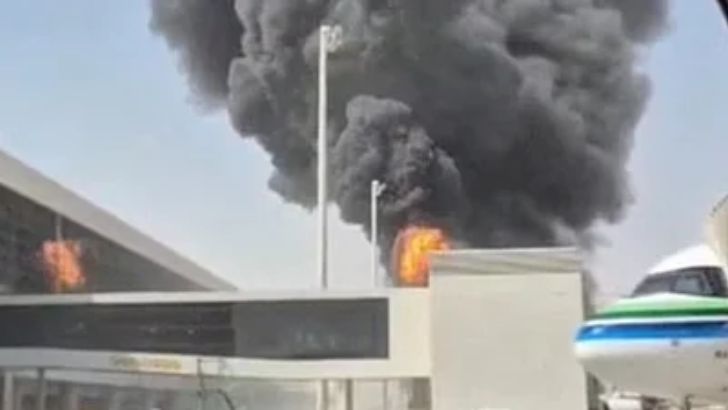
UAE suspends production
at gas facility
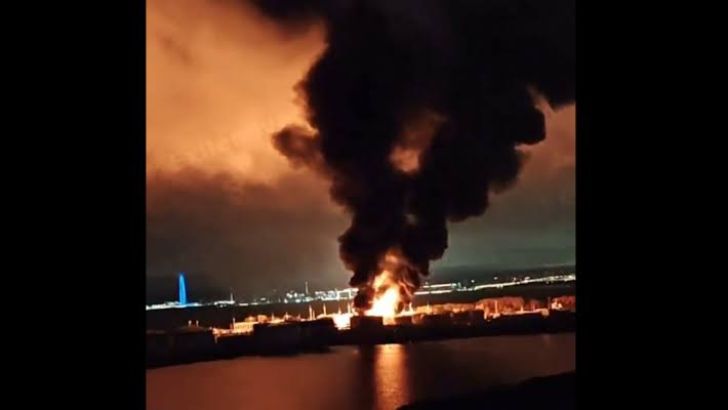
The United Arab Emirates announced it would suspend
production at the Habshan gas complex.
The Abu Dhabi media office said falling debris from an
interception of an attack caused three multiple fires at the facility. Two
Emirates and an Indian suffered minor injuries, the office said.
Meanehile, Oman Foreign Minister Badr Al-Busaidi said his
country, which has long mediated between Iran and the US, will provide support
to negotiations following the two-week ceasefire between the US, Israel and
Iran.
Al-Busaidi said serious negotiations are required to
establish a lasting regional peace.
“For now the world has stepped back from disaster,” he wrote
on X. “But there's no room for complacency.”
Middle East and
Europe on ceasefire
Diplomats in the Middle East and Europe are offering
assessments of the two-week ceasefire and the work that remains ahead.
Anwar Gargash, an adviser to United Arab Emirates President
Mohammed bin Zayed Al Nahyan, said his country has to manage a “complex
regional landscape”.
Gargash argued on social media that the UAE will have
“greater leverage, sharper insight, and a more solid capacity to influence and
shape the future”.
The European Union's top diplomat, Kaja Kallas, described
the ceasefire in the war in the Middle East as a “step back from the brink”.
The agreement has created “a much-needed chance to tone down
threats, stop missiles, restart shipping”. Kallas wrote on X. “The Strait of
Hormuz must be open for passage again.”
African Union head on
ceasefire
Mahmoud Ali Youssouf, chairperson of the African Union
Commission, said the ceaseire between the United States, Israel and Iran
presents a critical opportunity to ease the suffering of populations affected
directly and indirectly by the war.
Youssouf said the agreement reflects commendable leadership
and a shared commitment to the de-escalation that the union has consistently
called for.
He added that diplomacy guided by the United Nations Charter
remains the only viable path to resolving international crises.
Share Now

Leave a Reply
Your email address will not be published. Required fields are marked *
Other Stories