Collegium system best suited for India: Ex-CJI BR Gavai
BR Gavai said that the government should seriously consider the national litigation policy.
PTI
.jpeg)
-
Former CJI Justice BR Gavai said that the collegium doesn't work arbitrarily (PTI)
Bengaluru, 22 March
Former CJI
Justice BR Gavai on Sunday said that the collegium system is the best for
India.
He also
stressed that the government should seriously consider the national litigation
policy.
He was
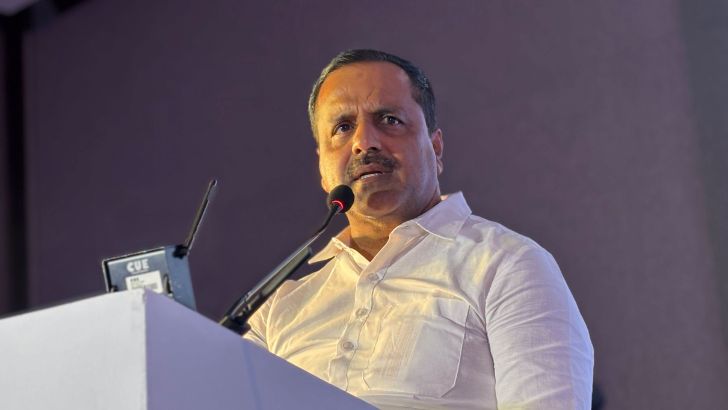
speaking at the valedictory session of the Supreme Court Bar Association's
(SCBA) first National Conference -2026 titled "Reimagining Judicial
Governance: Strengthening Institutions for Democratic Justice."
He said
the collegium doesn't work arbitrarily. The names of the judges are recommended
by the Chief Justice of the High Court and the collegium of the two most senior
judges, and thereafter, it goes to the Centre.
"The
inputs of the Centre, the Intelligence and everybody are gathered, and
thereafter, the Supreme Court Collegium takes a final decision. And even after
the names are sent, if the government or the executive have any issues, those
issues are addressed to the collegium. The collegium considers those issues,
and thereafter, it takes a final call," he added.
Speaking
about the huge gap between the sanctioned strength and the number of
appointments of the high court judges, the former CJI said, the judgement of
the Supreme Court, on more than one occasion, has stated that, on the second
reiteration, by the collegium, the executive is bound to make the appointment.
Stating
that as a judge he has always been in favour of maintaining a balance between
the protection of the environment and development, he said that courts do not
interfere in environmental matters without reason.
Earlier, CJI Justice Surya Kant said that AI must be integrated into the judicial system in a manner that strengthens the institution without undermining its core functions.
Share Now

Leave a Reply
Your email address will not be published. Required fields are marked *
Other Stories