




Karnataka govt drops plan to build stadium on KSIC land
Employees and environmental activists opposed the plan, warning that nearly 500 trees would be felled if the project went ahead.
Salar News
-
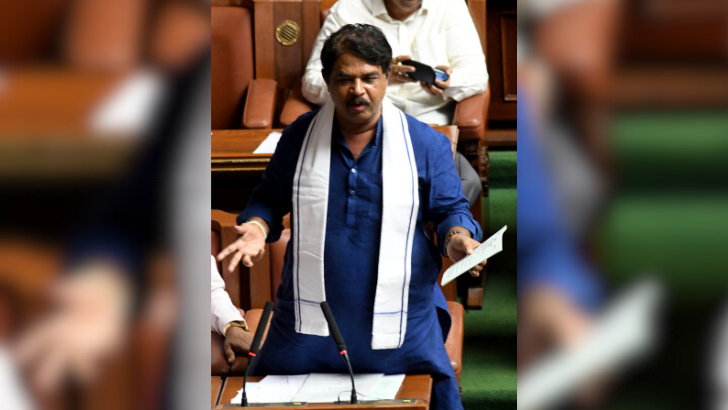
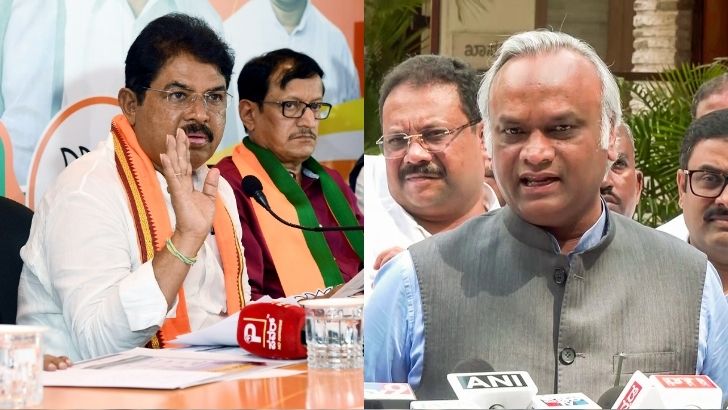
R Ashoka alleged that the government was attempting to close down the KSIC unit (Mohammed Asad)
Bengaluru, 9 March
The
Karnataka government has dropped its proposal to utilise five acres of land
belonging to the Karnataka Silk Industries Corporation (KSIC) for constructing
a stadium at T Narasipura in Mysuru district, Sericulture Minister K Venkatesh
informed the Legislative Assembly on Monday.
The
proposal had triggered protests as the land forms part of the KSIC filature
factory, a key unit involved in producing the famed Mysore Silk sarees and
other silk products. Employees and environmental activists had opposed the
plan, warning that nearly 500 trees would have to be felled if the project went
ahead.
Following
sustained opposition and a series of protests, the Minister clarified that the
government would not proceed with the stadium at the site. Instead, it has
begun taking measures to strengthen KSIC units in view of the strong demand for KSIC-brand Mysore Silk.
Responding
to concerns raised by Leader of the Opposition R Ashoka, Venkatesh said the
proposal had been based on incorrect information provided by officials. “The
land falls under Chief Minister Siddaramaiah’s constituency. Officers had
informed us that land was available there for a stadium. The Chief Minister has
now been apprised of the facts, and we are dropping the proposal,” he said.
Ashoka
alleged that the government was attempting to “close down” the KSIC unit. “The
Maharaja of Mysuru established KSIC. It is a profit-making organisation. Why
build a stadium there? If the government wants to construct one, it should
purchase land elsewhere,” he said.
Urban
Development Minister BS Suresha also supported protecting KSIC, noting the
strong global demand for its products. “KSIC sarees are sought after worldwide.
Even relatives from the United States call us to procure them, and there is a
two-month waiting period,” he said, while urging better wages and stronger
support for workers.
The
minister said KSIC produces about 350–400 sarees daily, and demand remains high
due to strict quality standards. Sarees with minor defects are sold at 25–30
per cent discounts, often drawing early-morning queues at outlets. KSIC
received the Geographical Indication tag for Mysore Silk in 2005-06.
Ashoka
also noted that the historic filature factory at T Narasipura was established
in 1912 by Mysuru Maharaja Nalvadi Krishnaraja Wadiyar.
Raising
concerns about workers’ pay, Ashoka said some employees initially earn Rs 3,000
a month and Rs 15,000–16,000 after confirmation. Venkatesh clarified that Rs
3,000 is paid during the training period.
Between
2022-23 and 2024-25, KSIC produced 3,10,667 sarees and sold 3,09,659, recording
profits of Rs 46.75 crore, Rs 73.40 crore and Rs 101.15 crore respectively.
No differences in government on internal quotas, decision soon
There
are no differences in the Congress on the internal reservation issue, and the
government would take a final decision at the next Cabinet meeting, Home
Minister G Parameshwara said on Monday.
Speaking
to reporters here, he said discussions were still underway to work out the
proportional distribution of reservation after the total quota was brought down
from 56 per cent to 50 per cent as per court directions.
"There
are no factions at all. Different people express different opinions. Just
because someone expresses an opinion does not mean it becomes a faction,"
Parameshwara said, dismissing speculation about divisions within the party.
He said
that after the Nagamohan Das report was submitted, the government retained the
56 per cent base and created three categories of internal reservation — six per
cent for SC left, six per cent for SC right and five per cent for
‘touchables’/others —and that the proposal had not faced opposition at the
time.
However, he noted that the court later ruled that reservations could not exceed 50 per cent as per the ceiling in the Indra Sawhney case.
Share Now

Leave a Reply
Your email address will not be published. Required fields are marked *
Other Stories


.jpg)
