Tiger census begins across Karnataka
Tiger Project Director has been named nodal officer to the National Tiger Conservation Authority (NTCA).
PTI
-
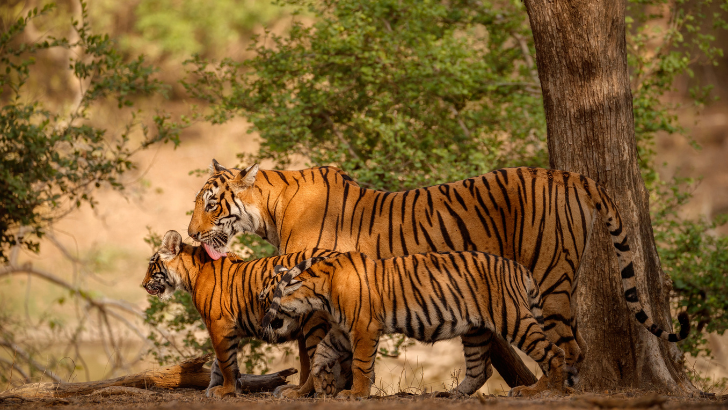
A total of 2,230 camera traps have been deployed across five tiger reserves (Freepik)
Bidar, 5 Jan
Karnataka
Forest Minister Eshwar Khandre said the state-wide estimation of tigers and
other carnivores began on Monday across all forest areas. The exercise covers
major tiger reserves, including Kali, Bhadra, Nagarahole, Bandipur and Biligiri
Rangaswamy Temple. Conducted once every four years, this is the sixth
nationwide tiger estimation. Karnataka was last estimated to have about 563
tigers, ranking second nationally in tiger population.
“The estimation will be conducted in patrol areas across all 38 forest divisions and every forest range in the state,” Khandre said. He added that teams of three members each will patrol about five km daily for three days starting from 5 January, collecting data such as pugmarks, scat and direct sightings of tigers, leopards, other carnivores and elephants.
The second
phase of the exercise will be held from 15 to 17 January, across 14 forest
divisions, focusing on direct sightings of herbivorous animals such as deer,
sambar, gaur and wild buffalo. In the third phase, camera traps will be
installed at suitable locations based on carnivore data gathered during the
first two phases, the minister said.
Tiger Project Director Ramesh Kumar has been named nodal officer to the National Tiger Conservation Authority (NTCA) to oversee the estimation exercise. A total of 2,230 camera traps have been deployed across five tiger reserves, with surveys already underway. Noting increased tiger movement into human areas, the minister said the population appears to have risen, though exact numbers will be known after the exercise concludes.
Share Now

Leave a Reply
Your email address will not be published. Required fields are marked *
Other Stories