TN CM Vijay asks PM Modi to withdraw Centre's Mekedatu stand in Rajya Sabha
In the Karnataka-Andhra Pradesh Alamatti case, SC ruled that consent of lower riparian state is absolutely necessary, Vijay pointed out.
PTI
-
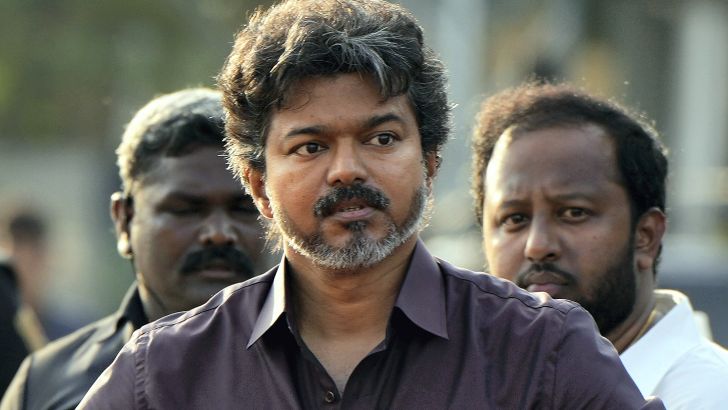
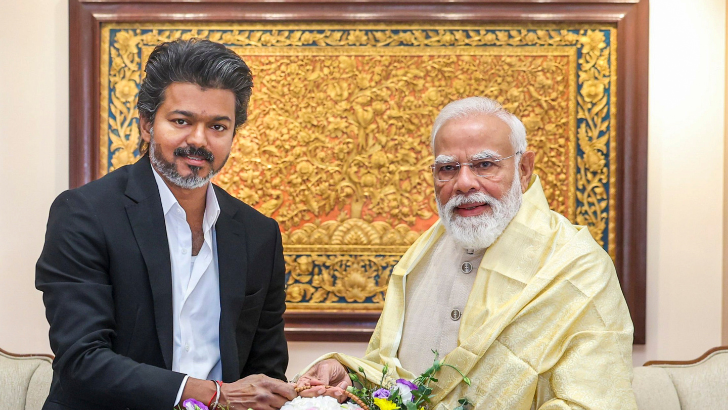
This comes in the backdrop of a likely meeting between TN CM Vijay and his Karnataka counterpart DK Shivakumar (PTI)
Chennai, 28 July
Tamil Nadu Chief Minister C Joseph Vijay on Tuesday told
Prime Minister Narendra Modi that the Centre's reply in the Rajya Sabha that
Supreme Court verdict does not stipulate that Karnataka should get riparian
states' consent vis-a-vis the proposed Mekedatu dam was
"disappointing."
Hence, that reply given by the Minister of State for Jal
Shakti (Unstarred Question No 876 in Rajya Sabha) dated July 27, 2026 without
referring to the settled law and legal principles in interstate water issues
may be withdrawn, Vijay urged Modi in a letter.
In the Karnataka-Andhra Pradesh Alamatti case, the apex
court has ruled that consent of lower riparian state is absolutely necessary,
he underscored. Vijay urged the Prime Minister to ensure that no statutory or
administrative approval is granted to the Mekedatu dam project unless it is
consistent with the Cauvery Water Disputes Tribunal (CWDT) Award and the
Supreme Court judgement.
The CM said the minister stated in the Upper House of
Parliament that the judgment of the Supreme Court dated 16 February 2018 does
not expressly stipulate that Karnataka should obtain the consent of the lower
riparian states before constructing a structure across the river Cauvery.
"This disappointing reply from the Minister of State
for Jal Shakti seems to have been made without taking into consideration the
prevailing legal position and settled law with regard to the consent of the
lower riparian states," Vijay said.
As far as the Cauvery Tribunal Award is concerned, the apex
court expressly affirmed Clause XVIII of the Tribunal Award, which preserves
the power of each State to regulate waters within its territory only "in a
manner not inconsistent with the order of the Tribunal." Thus, any project
that has the potential to affect the regulated flow regime established under
the Award necessarily requires scrutiny for consistency with the Award.
The Tribunal itself has laid down important guiding
principles. In the case of Kerala's Pambar Hydro-electric Project, involving
only 0.1 TMC of consumptive use, it directed that Kerala and Tamil Nadu should
jointly agree upon the schedule of releases so that downstream irrigation is
not adversely affected.
This demonstrates that the Tribunal attached paramount
importance not merely to annual quantities but also to coordinated regulation
of releases affecting lower riparian interests. Further, Clause XI of the Award
specifically prohibits any upper riparian State from taking action affecting
scheduled deliveries to downstream states except through mutual agreement and
consultation with the regulatory authority.
Clause XX similarly recognises that modifications of the
Award can only be achieved through agreement among the party states. Tamil Nadu
is therefore of the considered opinion that the proposed Mekedatu Project
cannot be evaluated merely as an engineering proposal.
Its legal permissibility must first be examined in the
context of the Final Award of the Cauvery Water Disputes Tribunal and the
judgment of the Supreme Court dated 16 February 2018.
Also, the rights of the lower riparian states must be
factored in and it is pertinent that the Detailed Project Report submitted by
Karnataka in 2019 was returned by the Central Water Commission for revision to
ensure compliance with the Tribunal Award and applicable guidelines."This
itself demonstrates that compliance with the Award remains an indispensable
precondition," Vijau underlined.
Against this background, the CM demanded that the reply of
the Union Miniser in the Parliament be withdrawn. Further, the CM urged Modi to
ensure that the rights of the lower riparian states in relation to both quantum
and regulated pattern of releases are fully protected.
Any future consideration of the project shall be undertaken
only after comprehensive technical and legal examination, taking into account
the concerns of all lower riparian states.
"The river Cauvery is not merely a source of water but
the lifeline of millions of farmers and citizens across southern India.
Protecting the integrity of the Tribunal Award and the judgment of the Supreme
Court is essential for maintaining confidence in the constitutional mechanism
governing inter-State rivers," Vijay added.
The union minister's reply comes against the background of expectations
of a meeting between the Tamil Nadu CM and his Karnataka counterpart DKShivakumar over the Cauvery issue.
Meanwhile, farmers organisations and leaders of parties have
opposed such a meeting and parleys over Cauvery arguing it would not help
establish Tamil Nadu's rights on the issue.
Share Now

Leave a Reply
Your email address will not be published. Required fields are marked *
Other Stories


.jpg)