
Nirmala Sitharaman tables Economic Survey ahead of 9th straight Budget
Finance Minister Nirmala Sitharaman is set to present her record ninth consecutive Union Budget on 1 February.
ANI
-
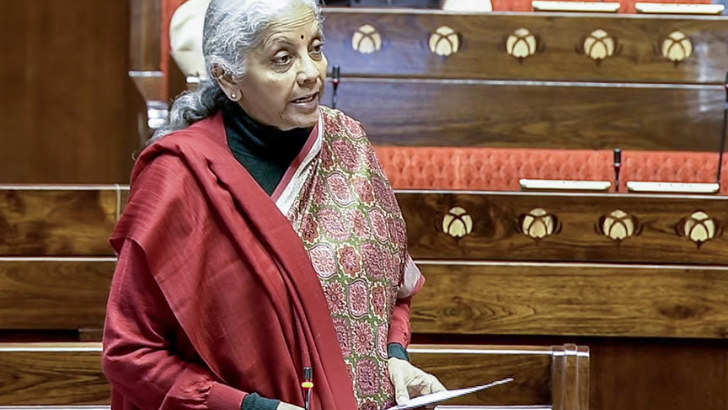
The Economic Survey plays a crucial role in the lead-up to the Union Budget (ANI)
New Delhi, 29 Jan
Union Finance Minister Nirmala Sitharaman on Thursday tabled
the Economic Survey of India in Parliament for the financial year 2025-26,
setting the stage for the Union Budget, which will be presented on Sunday, 1
February. This year, the Budget presentation falls on a weekend.
Finance Minister Nirmala Sitharaman is set to present a
record ninth consecutive Union Budget on 1 February , marking a significant
milestone in India's parliamentary and economic history.
The tabling of the Economic Survey ahead of the Budget
follows the long-standing tradition of outlining the state of the economy
before detailing future fiscal plans.
The Economic Survey of India is regarded as the nation's
official annual "report card" on the economy. It provides a
comprehensive, data-backed review of the economy's performance over the
previous year and offers a broad roadmap for future policy direction. As the
government's flagship annual report, it reviews key developments in the economy
over the past 12 months.
The Survey plays a crucial role in the lead-up to the Union
Budget. While the Budget focuses on future government spending, taxation, and
policy measures, the Economic Survey explains why those decisions are necessary
by analysing past economic performance and trends.
The Economic Survey is prepared by the Economic Division of
the Department of Economic Affairs under the leadership of the Chief Economic
Adviser (CEA). It is presented in two parts, each focusing on different aspects
of the economy.
Part 1, also known as Volume 1, provides a macroeconomic
overview and future outlook. This section offers a broad, thematic, and
analytical review of the Indian economy. It is forward-looking in nature and
helps set the policy direction for the coming year. It includes a detailed
analysis of major economic trends such as GDP growth, inflation measured
through CPI and WPI, fiscal deficit, and trade balance. It also examines key
conceptual and structural issues facing the economy and offers policy
recommendations. Additionally, it provides projections for the next financial
year and suggests reforms aimed at driving economic growth.
Part 2 of the Economic Survey is more detailed and
data-driven, focusing on the performance of specific sectors during the
previous financial year. This section covers sectoral analysis of agriculture,
industry, services, and infrastructure. It also addresses socio-economic
issues, including health, education, poverty, and climate change. The reportincludes extensive data and statistics, with detailed tables, charts, and
appendices highlighting the economy's performance.
The tabling of the Economic Survey marks a key step in the
Budget process, offering lawmakers, policymakers, and the public a clearer
understanding of India's economic condition ahead of the Union Budget
presentation.
Share Now

Leave a Reply
Your email address will not be published. Required fields are marked *
Other Stories






.jpg)