
Air pollution increases risk of eye infection, say doctors
PM2.5 is the main culprit for eye problems such as allergic conjunctivitis, scratches on the surface of the eyes, dryness, blurred vision, and increased sensitivity to light.
PTI
-
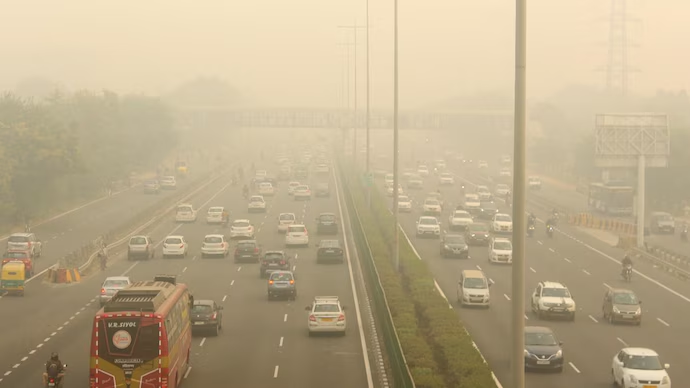
"Pollution may be unavoidable, but protecting our eyes is very much in our control," Dr Anshika Luthra Sharma said (PTI)
New Delhi, 17 Jan
Air pollution is considered a reason for respiratory and cardiac problems.Air pollution is considered a reason for respiratory and cardiac problems. However, experts warn that it also increases the risk of eye infection and aggravates existing issues among those with ocular problems.
Doctors
hold fine particulates -- PM2.5 -- the main culprit for eye problems such as
allergic conjunctivitis, scratches on the surface of the eyes, dryness, blurred
vision, and increased sensitivity to light.
"Every
winter, my clinic sees a rise in the number of people complaining of red,
itchy, watery, and burning eyes. The main reason is high air pollution,
especially fine particles known as PM2.5," said Dr Ajay Sharma, co-founder
of Eye Q Eye Hospital.
PM2.5
includes tiny particulates from vehicle smoke, dust, burning waste, and
firecrackers, he said, adding that these particles are so small that they
easily enter the eyes and settle on the cornea, the clear front layer of the
eye.
Solid
particles irritate and scratch the eye's surface, while liquid particles carry
chemicals that mix with tears and weaken their natural protection, the doctor
said.
"Because
of this, many people experience dryness, irritation, blurred vision, and
increased sensitivity to light. Children, elderly people, office-goers, and
patients who have had recent eye surgery are especially affected during the
winter smog," Dr Sharma said.
Dr Taru
Dewan, the head of the department of ophthalmology at RML hospital, said that
air pollution during winters is particularly troublesome as smog keeps
lingering.
"As
the smog engulfs us, the eyes face the brunt along with respiratory illnesses.
We are getting many allergic conjunctivitis patients with varying severity.
Moreover, cases of eye dryness worsen due to exposure to smoke," she said.
The risk
of ocular infection exacerbates when unclean hands rub the eyes, the doctor
highlighted. "I advise my patients to avoid exposure to a polluted
environment as far as possible and maintain hygiene. It seems difficult for
individuals to control pollution, but at least efforts to minimise the
generation of pollutants at their level can help. If everyone becomes
conscious, then collective efforts will show the way."
Eyes,
being exposed organs, tend to get directly impacted by pollution, with the most
common symptom being allergic in nature.
"This
is known as allergic conjunctivitis, which manifests as redness, irritation and
watering. Pollution can also aggravate dry eyes, more common in people staring
at screens for long hours and those using contact lenses," said Dr Umesh
Bareja, senior consultant, ophthalmology at Sitaram Bhartia Hospital.
He
flagged smoking as a major reason for the inner structures of the eyes getting
affected. "Even passive smoking can affect eye health. Smoking has been
linked to increased chances of cataract, glaucoma, uveitis and macular
degeneration," the doctor said.
The only
solution is public awareness and special policy initiatives to curb vehicular
and industrial pollution, burning of trash and coal, deforestation, and
regulation of construction activity, Dr Bareja said, adding that tobacco
smoking should be avoided at any cost.
Dr JS
Bhalla, North India Representative in the Scientific Committee of All India
Ophthalmological Society (AIOS ), explained that outdoor and indoor air
pollution is derived from different sources and can cause eye diseases.
"Among
air pollutants, high levels of PM2.5, while associated with Alzheimer's
disease, Parkinson's disease, and stroke, can also contribute to adult and
childhood glaucoma," the doctor said.
"We
are witnessing about a 30 per cent increase in patients with dry eyes in the
OPD," said Dr Bhalla, who is also a senior consultant at Perfect Eye
Centre, Delhi.
Dr
Anshika Luthra Sharma, Ophthalmologist and Cornea, Cataract, and Refractive
Surgeon at Eye Q Eye Hospital, said, "The good news is that simple
precautions can make a big difference."
She
recommended wearing wrap-around glasses when stepping out of the home and
washing the face and eyes with clean water after returning home.
One
should avoid rubbing their eyes, even if they itch and stay well-hydrated while
limiting outdoor exposure on high-pollution days. If discomfort persists, one
should consult an eye specialist instead of self-medicating, Dr Sharma said.
"Pollution may be unavoidable, but protecting our eyes is very much in our control,"
she added.
Share Now

Leave a Reply
Your email address will not be published. Required fields are marked *
Other Stories







.jpg)