
Forces that opposed Somnath temple reconstruction still active, need to defeat them: PM Modi
Modi recalls hurdles faced by Sardar Patel during Somnath temple reconstruction after Independence.
PTI
-
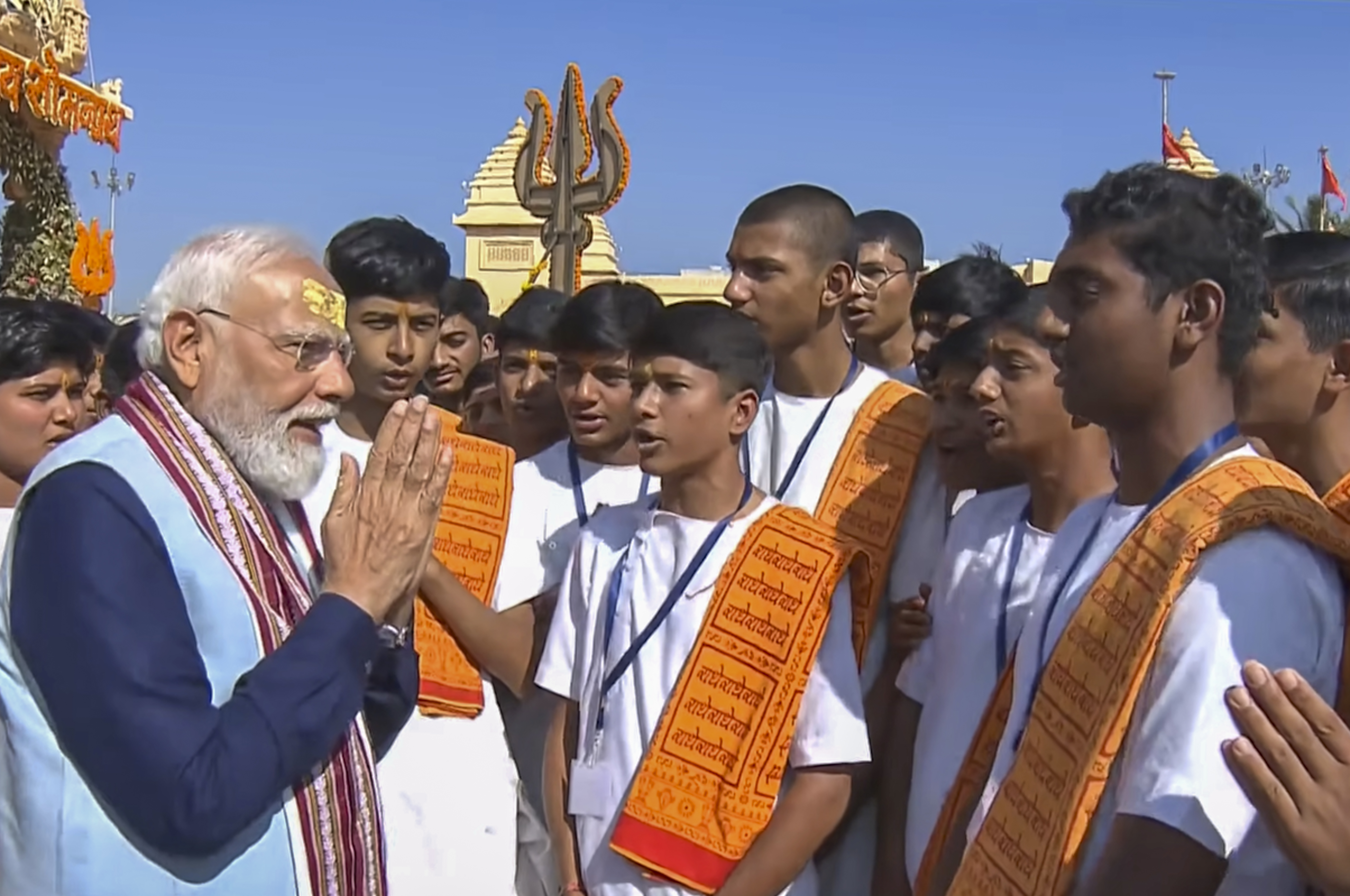
At Somnath event, Modi warns divisive forces opposing temple reconstruction still exist (PTI)
Somnath, 11 Jan
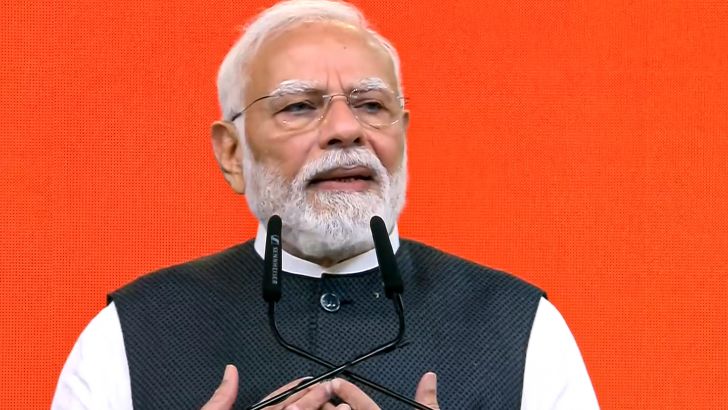
Prime Minister Narendra Modi on Sunday said the forces that opposed the reconstruction of the Somnath temple after Independence are “still active among us”, and stressed that India must remain alert, united and strong to defeat them.
Referring to the repeated attacks on the historic temple in Gujarat’s Gir Somnath district and its rebuilding each time, Modi said hearts can never be won at the point of a sword.
Somnath’s 1,000-year history, he said, is not one of destruction and defeat but of victory and reconstruction.
The Prime Minister was addressing a large gathering at the Somnath Swabhiman Parv, organised to mark the resilience of Indian civilisation, symbolised by the rebuilding of the Somnath temple, which was repeatedly ravaged by foreign invaders beginning with Mahmud of Ghazni’s attack in 1026.
Despite repeated attempts over centuries to destroy it, the Somnath temple, dedicated to Lord Shiva, stands today as a powerful symbol of resilience, faith and national pride, owing to the collective resolve and efforts to restore it to its ancient glory.
Modi said that although the attacks on the Somnath temple were driven by hatred, attempts were made to project them as acts of simple looting.
“Books were written to cover up the religious motivation, portraying it merely as ordinary loot. The Somnath temple was repeatedly destroyed. If the invasions had been solely for plunder, they would have stopped after the first major loot 1,000 years ago,” he said.
“But that did not happen. The sacred deity of Somnath was desecrated. Repeated attempts were made to alter the very form of the temple. And we were taught that Somnath was destroyed for the sake of loot. The true history of hatred, atrocity and terror was concealed from us,” he added.
No person truly devoted to their religion would support such an extremist ideology, Modi said, adding that those involved in appeasement instead knelt before religious extremism.
After Independence, when Sardar Vallabhbhai Patel took the oath to rebuild the Somnath temple, his path was obstructed, the Prime Minister said, noting that objections were also raised when India’s first President, Dr Rajendra Prasad, came to inaugurate the reconstructed temple in 1951.
“Unfortunately, those forces which opposed the reconstruction of the Somnath temple are still present in our country and remain active. Instead of swords, conspiracies are now being hatched against India through other means,” Modi said.
“That is why we need to remain alert and united. We must make ourselves more powerful to defeat forces that are conspiring to divide us,” he added.
The Prime Minister said the Somnath temple came under attack several times, from Mahmud of Ghazni in 1026 to Mughal ruler Aurangzeb in the 17th and 18th centuries.
Mahmud Begda and Aurangzeb even attempted to convert the temple into a mosque, he said, adding that after every attack, the temple was rebuilt by Lord Shiva’s devotees, including Malwa queen Ahilyabai Holkar.
“Civilisations that seek to advance by destroying others ultimately destroy themselves. Pilgrimage sites like Somnath teach us that the path of creation is long, but it is also the lasting path,” Modi said.
“Somnath’s history speaks of the valour of our ancestors. It is a testament to their sacrifice and dedication,” he noted.
The fundamentalist invaders, he said, are now reduced to pages of history, while the flag of the Somnath temple continues to fly high.
Just as the temple was targeted, foreign invaders tried to destroy India for centuries, Modi said, but neither Somnath nor the country bowed before them.
“The invaders believed they had won by destroying the temple, but after 1,000 years, the flag of Somnath is still flying high,” he said, adding that this millennium-long struggle has no parallel in world history.
“The invaders kept coming and attacks of religious terror continued. But in every era, Somnath was rebuilt. Such a long struggle, such sustained resistance and such unwavering faith in one’s culture are difficult to find anywhere else in world history,” he said.
Modi also recalled the sacrifice of bravehearts such as Veer Hamirji Gohil and Vegdaji Bhil, who laid down their lives defending the Somnath temple.
“Unfortunately, they were not given their due credit. Some historians and politicians even attempted to whitewash the history of these invasions,” he said.
Earlier in the day, the Prime Minister led a ‘Shaurya Yatra’, a ceremonial procession organised to honour those who sacrificed their lives defending the Somnath temple.
The yatra featured a procession of 108 horses, symbolising valour and sacrifice. Large crowds gathered along the route from Shankh Circle to Veer Hamirji Gohil Circle to greet the Prime Minister.
Standing on a specially designed vehicle, Modi, accompanied by Gujarat Chief Minister Bhupendra Patel, waved to the crowd during the one-kilometre-long procession.
He later offered prayers at the temple and paid tributes to Sardar Vallabhbhai Patel, whose statue is installed near the temple premises.
A group of young priests, known as rushi kumars, walked alongside Modi’s vehicle, playing the damru, an instrument associated with Lord Shiva. At one point, the Prime Minister borrowed two damrus from a priest and played them while standing on his vehicle
Share Now

Leave a Reply
Your email address will not be published. Required fields are marked *
Other Stories
.png)