Yunus regime shielding extremists, hurting ties with India: Sheikh Hasina
Hasina says that the recent tensions and unrest in Bangladesh were deliberately engineered.
ANI
-
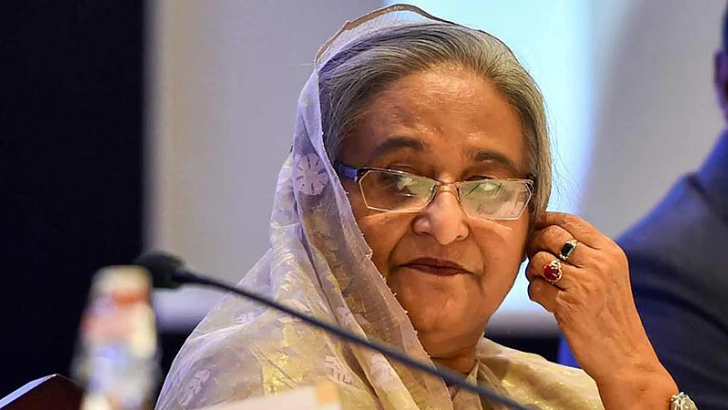
Hasina said India's worries about the security of its diplomatic staff were well-founded (PTI)
New Delhi, 22 Dec
With Bangladesh grappling with unrest after
a fresh spell of violence last week, former Prime Minister Sheikh Hasina
mounted a strong critique of the Muhammad Yunus-led interim government,
accusing it of empowering extremist elements, stoking anti-India sentiment and
weakening democratic structures, developments she said endanger both domestic
stability and regional security.
In an email interview with ANI, addressing
concerns over growing hostility towards India and the safety of Indian
diplomats, Hasina alleged that recent tensions were deliberately engineered.
"This hostility is being manufactured by extremists who have been
emboldened by the Yunus regime," she said.
Referring to incidents targeting Indian and
domestic institutions, she added, "These are the same actors who marched
on the Indian embassy and attacked our media offices, who attack minorities
with impunity, and who forced me and my family to flee for our lives." She
further alleged that Yunus had "placed such figures in positions of power
and released convicted terrorists from prison."
Hasina said New Delhi's worries about the
security of its diplomatic staff were well-founded. "A responsible
government would protect diplomatic missions and prosecute those who threaten
them. Instead, Yunus grants immunity to hooligans and calls them warriors,"
she said.
On the International Crimes Tribunal (ICT)
verdict against her, Hasina dismissed the ruling as politically driven.
"This verdict has nothing to do with justice and everything to do with
political elimination," she said.
Alleging procedural unfairness, she added,
"I was denied the right to defend myself, and denied lawyers of my
choosing. The tribunal was used to perpetrate a witch hunt of the Awami
League."
Despite these allegations, Hasina said she
continued to believe in Bangladesh's constitutional foundations. "My faith
is not lost in Bangladesh's institutions, however. Our constitutional tradition
is strong, and when legitimate governance is restored and our judiciary regains
its independence, justice will prevail," she said.
Questioning the credibility of the February
elections, from which the Awami League has been barred, Hasina said, "An
election without the Awami League is not an election, but a coronation."
She claimed that, "Yunus governs
without a single vote from the Bangladeshi people, and now he seeks to ban the
party that has been elected nine times by popular mandate."
Warning of large-scale voter exclusion,
Hasina said, "Historically, when Bangladeshis cannot vote for their
preferred party, they do not vote at all. So millions will be effectively
disenfranchised if this ban on the Awami League is maintained," adding
that any administration formed under such conditions "will lack the moral
authority to govern."
Reiterating her long-standing political
stance, Hasina said, "My past, present and future have always been tied to
the safety and security of Bangladesh, and I wish to see my country elect a
leader with the authority to rule."
Responding to renewed calls for her
extradition after the ICT verdict, Hasina said the demands were politically motivated.
"These growing demands you reference come only from an increasingly
desperate and adrift Yunus administration," she said, again referring to
the proceedings as "a politically-motivated kangaroo tribunal."
She acknowledged India's continued support,
saying she was "heartened and grateful for the solidarity that India
continues to show in maintaining its hospitality for me," and noted that
this approach had been backed "by all of India's political parties."
Explaining her departure from Bangladesh,
Hasina said, "I left Bangladesh to prevent further bloodshed, not out of
fear of facing justice." Rejecting current calls for her return, she
added, "You cannot demand my return to face my political
assassination."
She reiterated her legal challenge to the
interim leadership, stating, "I am confident an independent court would
acquit me."
"When Bangladesh has a legitimate
government and an independent judiciary, I will gladly return to the country I
have served all my life," she said.
On the strain in India-Bangladesh ties,
including Dhaka's move to summon the Indian envoy, Hasina placed responsibility
on the interim administration. "The strain you are witnessing is entirely
of Yunus's making," she said.
She accused it of adopting an adversarial
posture towards India, failing to protect minorities and allowing extremist
influence in policymaking.
Highlighting bilateral ties, Hasina said,
"India has been Bangladesh's most steadfast friend and partner for
decades," adding that the relationship was "deep and fundamental"
and would "outlast any temporary government."
Referring to the killing of Sharif Usman
Hadi, Hasina said the incident illustrated the prevailing breakdown of law and
order. "This tragic killing reflects the lawlessness that uprooted my
government and has multiplied under Yunus," she said.
"Violence has become the norm while
the interim government either denies it or is powerless to stop it," she
added.
She said persistent instability undermines
Bangladesh's standing abroad. "When you cannot maintain basic order within
your borders, your credibility on the international stage collapses,"
Hasina said.
On the growing role of Islamist forces,
Hasina said, "I share this concern, as do the millions of Bangladeshis who
prefer the safe, secular state we once were."
She alleged that Yunus had "placed
extremists in cabinet positions, released convicted terrorists from prison, and
allowed groups linked to international terrorist organisations to take roles in
public life."
"This should alarm not only India, but
every nation invested in South Asian stability," she said, adding,
"The secular character of Bangladeshi politics was one of our greatest
strengths."
Responding to remarks by some Bangladeshi
leaders referencing the Siliguri Corridor or "Chicken's Neck," Hasina
termed such statements "dangerous and irresponsible."
"No serious leader would threaten a
neighbour upon whom Bangladesh depends for trade, transit, and regional
stability," she said.
Emphasising that such views did not reflect
public opinion, she said, "These voices do not represent the Bangladeshi
people," and expressed confidence that "once democracy is restored
and responsible governance returns, such reckless talk will end."
On signs of closer Pakistan-Bangladesh
engagement, Hasina said Bangladesh had traditionally adhered to
"friendship to all, malice toward none," but criticised the interim
leadership's actions.
"Yunus has no mandate to realign
Bangladesh's foreign policy," she said, adding that he had "no right
to make strategic decisions that could impact generations."
Reiterating her broader position, Hasina
said, "Once Bangladeshis can vote freely again, our foreign policy will
return to serving our national interests," while asserting that
India-Bangladesh relations were "fundamental and will endure long after
this interim government is gone." (ANI)
Share Now

Leave a Reply
Your email address will not be published. Required fields are marked *
Other Stories